Toilet Soap Production Line: Equipment and Process
Introduction
The global demand for high-quality bar soap continues to grow as consumers look for personal care products with better performance, attractive appearance, and reliable quality. For soap manufacturers, investing in a professional toilet soap production line is the key to achieving stable production capacity, consistent product quality, and efficient manufacturing.
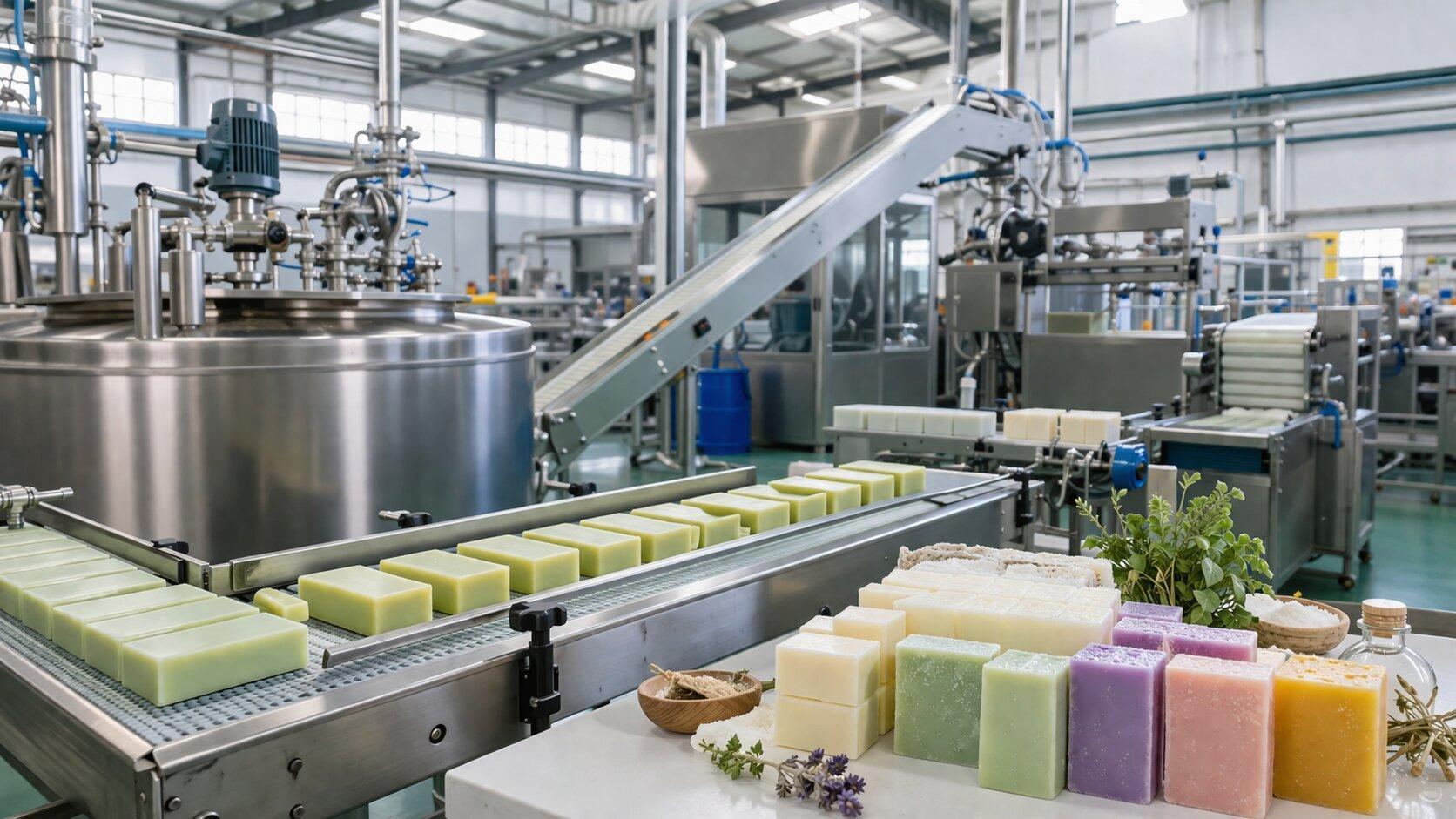
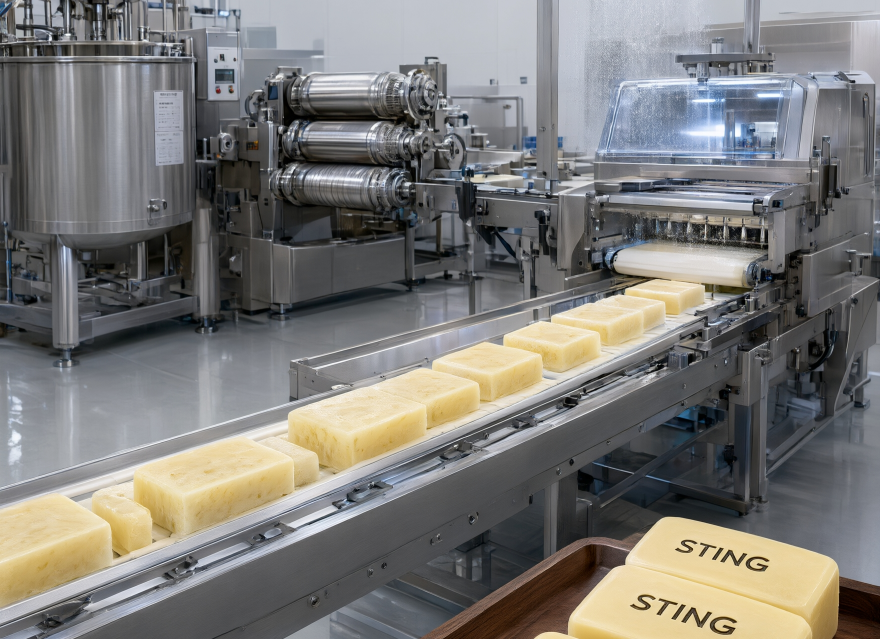
A modern toilet soap production line integrates multiple processes, including mixing, refining, vacuum extrusion, cutting, stamping, and packaging. With advanced soap manufacturing equipment, factories can produce different types of toilet soap, beauty soap, and personal care soap products according to market requirements.
STING provides complete toilet soap production solutions for global soap manufacturers, including production line design, individual machines, installation support, and customized technical solutions.
What Is a Toilet Soap Production Line?
A toilet soap production line is a complete set of industrial machines used to manufacture finished toilet soap bars from soap noodles or soap raw materials.
Unlike traditional manual soap production methods, an automatic toilet soap production line offers:
- Higher production efficiency
- Stable soap quality
- Better appearance consistency
- Lower labor costs
- Flexible production capacity
The production capacity can be customized according to factory requirements, from small-scale soap businesses to large industrial soap manufacturing plants.
Main Equipment of a Toilet Soap Production Line
A complete toilet soap production line normally includes the following equipment:
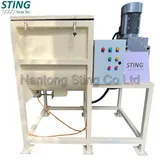
1. Soap Mixer
The soap mixer is the first stage of the production process. It combines soap noodles, fragrance, color, additives, and other ingredients evenly.
Main functions:
- Mixing raw materials uniformly
- Improving soap quality consistency
- Preparing materials for refining
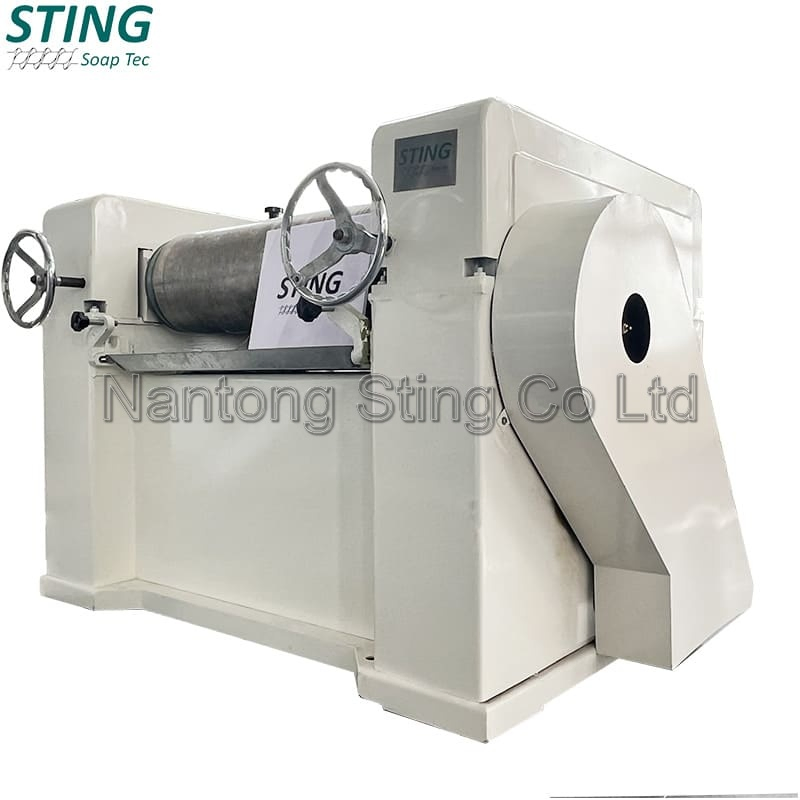
2. Three Roll Mill / Soap Refining Machine
The refining machine improves the texture and quality of soap by removing impurities and creating a smooth soap structure.
Advantages:
- Fine and uniform soap texture
- Better fragrance distribution
- Improved final product appearance
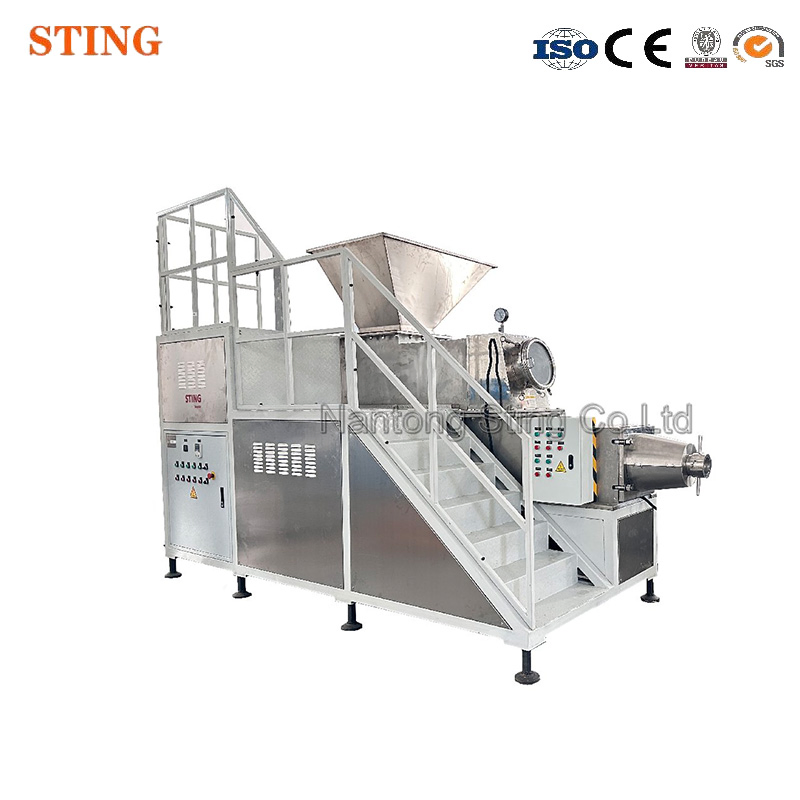
3. Vacuum Soap Plodder Machine
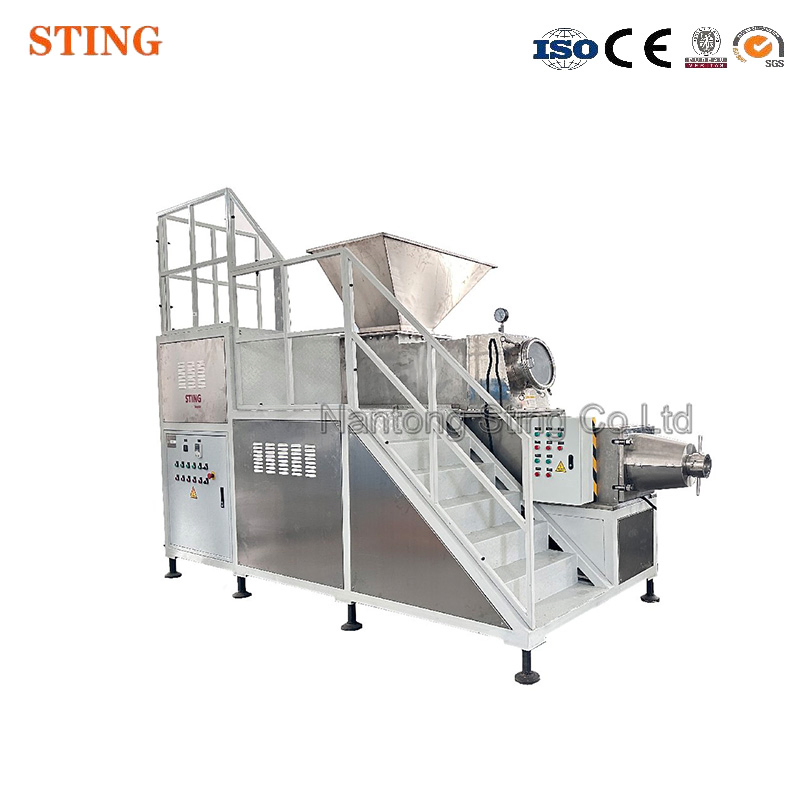
The vacuum plodder is one of the most important machines in a toilet soap production line.
It compresses and extrudes refined soap into continuous soap bars.
Benefits:
- Removes air bubbles
- Improves soap density
- Produces smooth soap bars
- Supports continuous production
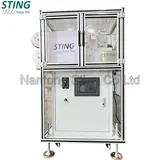
4. Soap Cutting Machine
After extrusion, the continuous soap bar is cut into individual pieces.
Features:
- Accurate cutting size
- High production speed
- Easy operation
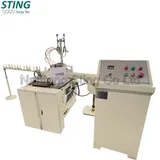
5. Soap Stamping Machine
The stamping machine creates the final shape and logo on soap bars.
It allows manufacturers to customize:
- Brand logo
- Soap shape
- Product design
6. Soap Packaging Machine
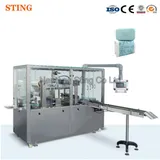
Packaging is the final stage before products enter the market.
Automatic packaging equipment improves:
- Production efficiency
- Product appearance
- Packaging consistency
Toilet Soap Production Process
The typical toilet soap manufacturing process includes the following steps:
Step 1: Raw Material Preparation
Common raw materials include:
- Soap noodles
- Fragrance
- Pigments
- Moisturizers
- Functional additives
The raw materials are prepared according to the product formula.
Step 2: Mixing
All ingredients are mixed evenly to achieve the desired soap formula.
Step 3: Refining
The mixed soap material passes through refining equipment to improve smoothness and quality.
Step 4: Vacuum Extrusion
The refined soap is processed through a vacuum plodder machine.
This process:
- Removes air
- Increases soap density
- Creates continuous soap bars
Step 5: Cutting and Stamping
The soap bars are cut into required sizes and stamped with brand designs.
Step 6: Packaging
Finished toilet soap bars are packed and prepared for shipment.
Benefits of Investing in an Automatic Toilet Soap Production Line
1. Higher Production Efficiency
Automatic machines reduce manual operation and allow continuous production.
2. Consistent Product Quality
Precise control of each production stage ensures stable soap quality.
3. Flexible Product Development
Manufacturers can produce different:
- Toilet soaps
- Beauty soaps
- Herbal soaps
- Customized branded soaps
4. Lower Long-Term Production Cost
Automation reduces labor requirements and improves overall productivity.
How to Choose the Right Toilet Soap Production Line?
Before purchasing soap manufacturing equipment, buyers should consider:
Production Capacity
Different factories require different capacities.
Examples:
- Small soap factory: suitable for startup businesses
- Medium production line: suitable for growing manufacturers
- Large industrial line: suitable for high-volume production
Soap Type
The equipment configuration depends on:
- Toilet soap
- Laundry soap
- Beauty soap
- Transparent soap
Factory Space
The layout design should match:
- Production area
- Raw material storage
- Packaging area
- Finished product warehouse
Supplier Experience
A reliable supplier should provide:
- Complete engineering solutions
- Machine customization
- Installation guidance
- Technical support
Why Choose STING Toilet Soap Production Line?
STING specializes in designing and manufacturing soap production equipment for global customers.
Our solutions include:
- Complete toilet soap production lines
- Laundry soap production lines
- Individual soap machines
- Customized soap manufacturing solutions
With professional engineering experience, STING helps customers build efficient and reliable soap production facilities.
Frequently Asked Questions (FAQ)
1. What is a toilet soap production line?
A toilet soap production line is a complete manufacturing system used to produce finished toilet soap bars through mixing, refining, extrusion, cutting, stamping, and packaging processes.
2. What capacity can a toilet soap production line produce?
The capacity depends on the machine configuration and customer requirements. STING can provide customized solutions for small, medium, and large-scale soap factories.
3. What raw materials are used in toilet soap production?
Common materials include soap noodles, fragrance, colorants, moisturizers, and other functional ingredients.
4. How much factory space is required for a toilet soap production line?
The required space depends on production capacity, machine layout, storage requirements, and packaging methods. A customized factory layout can be designed according to customer conditions.
5. Can the toilet soap production line produce different soap brands?
Yes. By changing formulas, molds, and packaging designs, manufacturers can produce different toilet soap brands and product types.
6. Does STING provide installation and technical support?
Yes. STING provides technical assistance, production line guidance, and after-sales support for customers worldwide.
Conclusion
A professional toilet soap production line provides soap manufacturers with an efficient solution for producing high-quality bar soap products. From raw material mixing to final packaging, each machine plays an important role in ensuring production efficiency and product quality.
For companies planning to start or expand a soap manufacturing business, selecting the right equipment supplier is essential.
STING delivers complete soap production solutions designed for global soap manufacturers.
How to Select a Soap Plodder Machine
How to Choose a Laundry Soap Production Line: A Complete Guide for Global Buyers