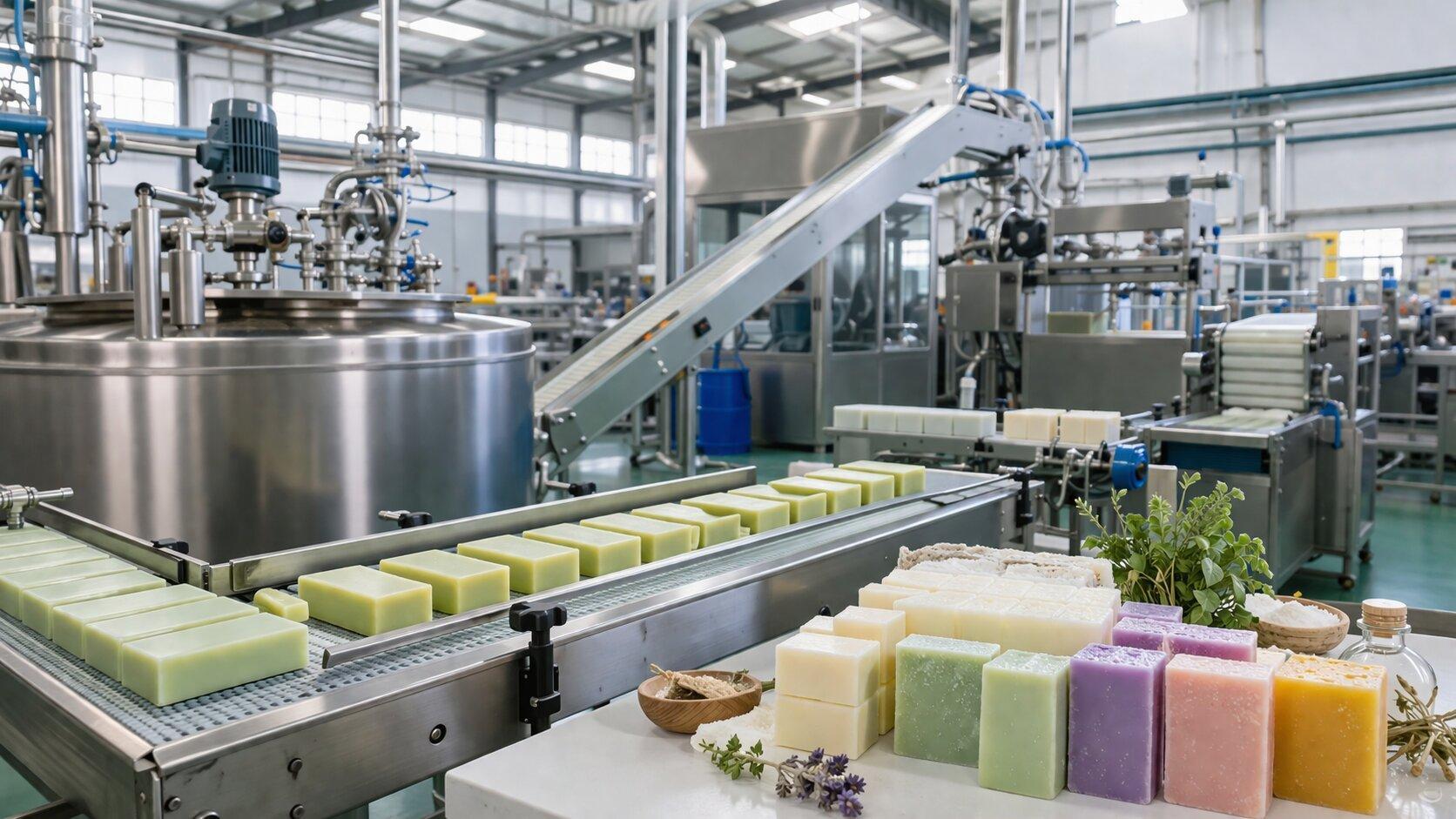
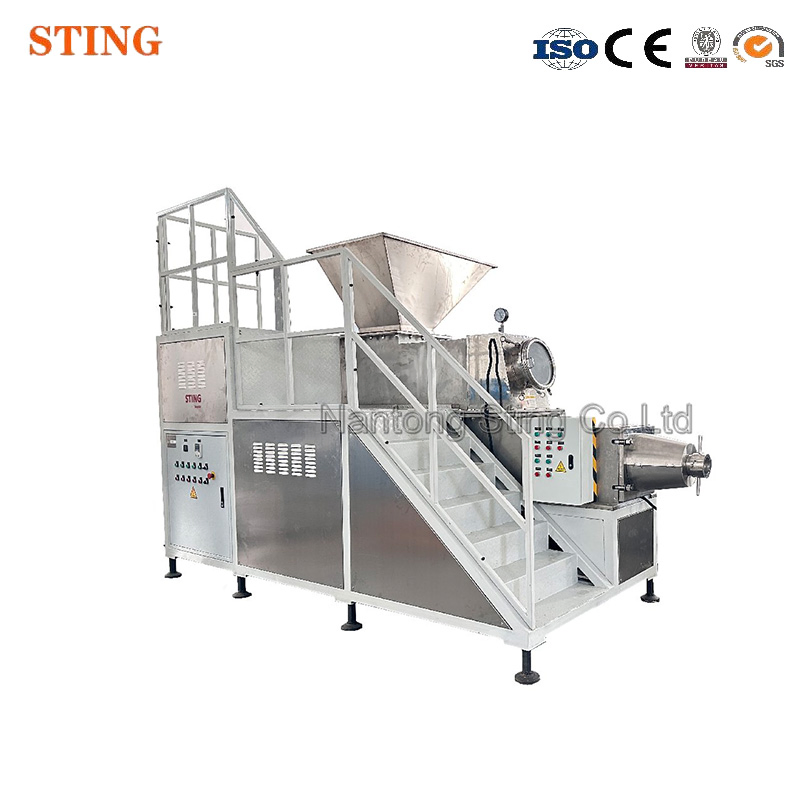
Industrial Soap Making Machine vs Commercial Machine: Key Differences Introduction
Many soap factory investors confuse an industrial soap making machine with ordinary commercial soap manufacturing equipment. Although both devices produce bar soap, their structural design, running stability and production positioning are completely different. Industrial soap production lines are specially customized for large-scale, long-term and high-standard factory mass production, while commercial small soap machines only adapt to small-batch intermittent processing. Based on years of on-site installation and commissioning experience, this article analyzes their core differences to help buyers select suitable soap processing equipment accurately.
Core Differences Between Industrial and Commercial Soap Making Equipment
1. Production Capacity and Operation Mode
A professional industrial soap production machine supports uninterrupted continuous operation, with a stable hourly output of 800–2000kg. The annual stable production capacity can reach more than 5000 tons, which fully meets the mass production demand of large daily chemical factories. In contrast, commercial semi-automatic soap making devices only work stably for 4–6 hours a day, with an hourly output of less than 500kg, and are prone to overheating and parameter drift after long-term operation.
2. Material and Durability Standard
Formal industrial-grade soap manufacturing equipment adopts full 304 stainless steel anti-corrosion body, which is resistant to alkali corrosion and material wear. The service life is stable at 8–10 years. Commercial soap machines mostly use ordinary iron or thin stainless steel materials, which are easy to rust and deform after 1–2 years of high-frequency use, leading to reduced soap molding qualification rate.

3. Product Qualification Rate and Consistency
Equipped with vacuum defoaming and frequency conversion constant pressure system, industrial soap making lines keep the finished product qualification rate above 99.2% in long-term mass production. The soap size, density and hardness are highly unified. Ordinary commercial equipment has no precise parameter control system, with a qualification rate of only 90%–93%, and defective products such as bubbles and irregular shapes often appear.
FAQ
Q1: Is an industrial soap making machine necessary for new soap factories?
A: Factories targeting long-term mass sales and large orders are recommended to choose industrial-grade equipment. Small start-up workshops can prefer commercial machines for trial production.
Q2: Can industrial soap machines produce small-batch customized soap?
A: Yes. Modern industrial soap production equipment supports flexible switching of molds and formulas, adapting to both large-batch standard products and small-batch customized soap production.
Q3: What is the biggest advantage of industrial soap production lines?
A: Stable 24-hour operation, ultra-low failure rate, consistent product quality and lower unit production cost.
Conclusion & Call to Action
In short, industrial soap making machines are the best choice for standardized and large-scale soap factory production, with irreplaceable advantages in capacity, stability and product quality. Contact us now to get professional equipment selection guidance and factory production solutions!
Laundry Soap Package Box: Custom, Eco-Friendly & Durable Packaging
Automatic Bar Soap Making Machine: Scalable Automated Soap Production Equipment Guide